

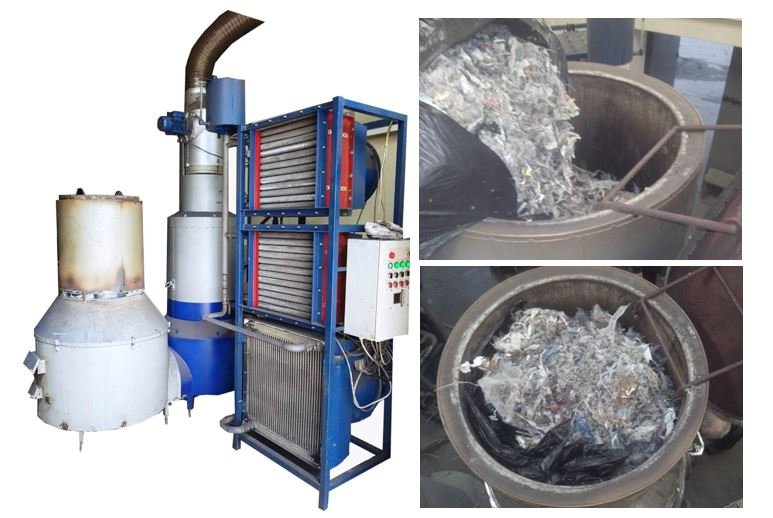
Processing of all types of organic waste, including hazardous materials (such as household, industrial, medical, biological, and agro-industrial waste, as well as oil sludge), via high-temperature thermal destruction.
Technical Specifications:
- Capacity: 100 kg/h
- Destruction temperature: from 1200°C
- Energy consumption: 3 kW/h
- Operating mode: 24/7 (continuous)
- Reactor loading: via conveyor (manual feeding onto the conveyor)
- Reactor unloading: automatic
- Auxiliary fuel: propane (supplied from cylinders; used during startup for a maximum of 15 minutes)
- Control system: semi-automatic (does not include emission quality monitoring)
- Control system functions: signaling for reactor loading, regulating unloading, and monitoring the reactor cooling system
- Heat recovery: water-based
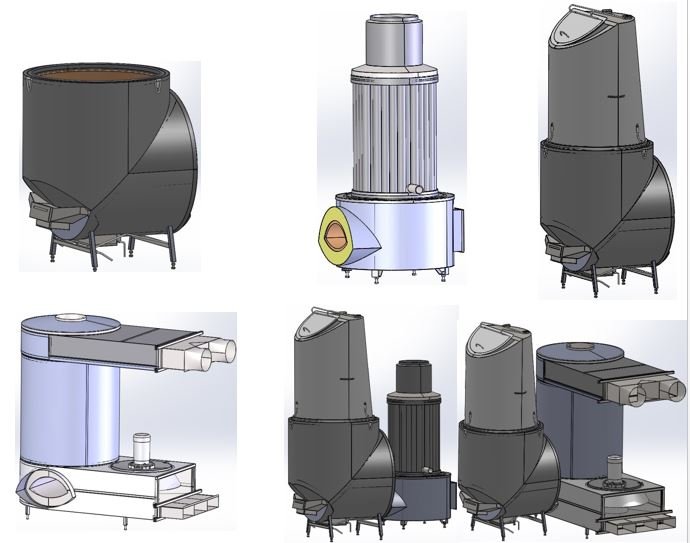
- Reactor dimensions: 3000 x 3000 x 4500 mm (to be finalized during the design phase)
- Reactor weight: 2000 kg (to be finalized during the design phase)
- Water-based heat recovery unit dimensions: ø1500 x 3000 mm
- Dimensions of the area for preparation, receiving, and feeding of materials for destruction:
15,000 x 15,000 x 4,500 mm
- Material feed system: conveyor, screw feeder (to be specified during the design phase)
- Energy consumption of the water-based heat recovery unit: 3 kWh
- Water for the reactor: not required
- Water volume for the system: calculated value
- Operating personnel: 2 persons per shift
- Sewage/drainage system: none
- Compressed air: not required
Upon signing the contract, the Customer shall provide:
- – regulatory requirements that must be met
- – specification of the morphological composition (of the waste)
waste (as a percentage per cubic meter)
- – heat transfer medium: water or air.
Warranty: 12 months.
Equipment of our own manufacture.
Purpose:
Processing of all types of organic waste, including hazardous waste (municipal, industrial, medical, biological, and agricultural waste, oil sludge, etc.) via high-temperature thermal destruction.
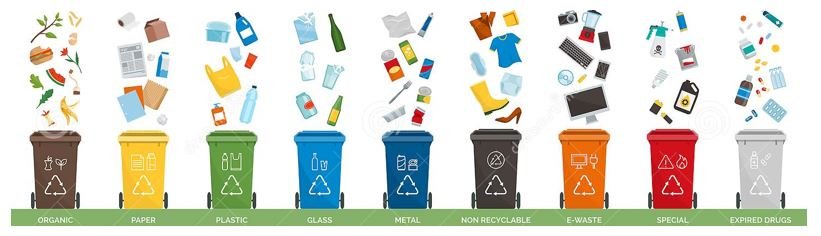
Waste processed in the reactor: and many others…
Technology
The high-temperature incineration of various types of waste is based on a combustion process organized within a two-zone system: a primary zone for initial combustion and active gasification, and a secondary zone for the complete afterburning of the generated gases. This design of a gasification-type thermal reactor allows for the use of virtually any organic substance as fuel—whether pre-processed (standard fuel) or raw (various types of organic waste) with a moisture content of up to 60%.
The temperature in the afterburning zone reaches 1300 °C or higher. Under these conditions, complex organic compounds undergo complete thermal decomposition, enabling the reactors to be used for the disposal of any organic waste, including hazardous waste. The reactors operate without the need for external energy sources.
When utilizing this waste processing technology, auxiliary fuel (gaseous or liquid) is required to bring the reactor to its operating state (preheating). The reactor can be equipped with systems that accelerate the breakdown of particularly complex organic compounds, ensuring a high degree of exhaust gas purification. Furthermore, the units can be fitted with specialized filters. The reaction process is maintained and monitored by an automated control system.
This fundamental design ensures maximum operational safety.
The reactor’s internal lining is constructed from high-temperature refractory materials capable of withstanding temperatures of at least 1800°C, ensuring the equipment’s reliability and long service life. Reactors, fuel feed mechanisms, and heat recovery systems can be custom-designed to handle specific types of waste and meet unique technological requirements. Every stage of the process—from fuel loading to heat extraction—can be fully automated. The reactor is equipped with a control panel that allows the operator to set the parameters maintained during the unit’s operation.
Throughout the waste disposal process, sensors monitor temperatures in both the primary combustion chamber and the afterburner (secondary combustion chamber). Data from the thermocouples is transmitted to a controller.
Once the combustion process is complete, the ash residue and solid slag (amounting to 3–5% of the initial volume) are removed via a screw conveyor and subsequently disposed of as low-hazard waste.
Flammable volatile compounds generated during combustion are directed into the reactor’s secondary combustion chamber (afterburner).
In this chamber, the gases are subjected to higher temperatures than in the primary furnace—typically ranging from 1100°C to 1300°C. Here, the volatile combustible compounds are completely neutralized, resulting in “clean flue gases” that are entirely safe for the environment.
The neutralized gases are then released into the atmosphere through a chimney, posing no harm to the environment.
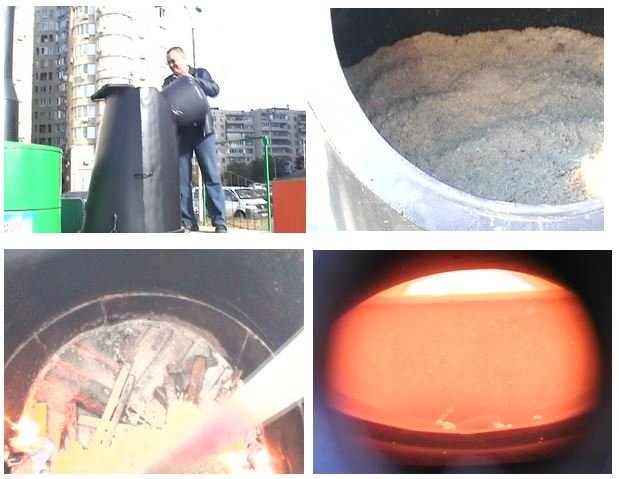
Based on this technology, reactors have been developed, manufactured, and tested that utilize wood waste (such as sawdust, wood chips, and offcuts) as fuel to generate thermal energy.
A high-pressure water-tube heat exchanger can be integrated into heating systems or other industrial processes requiring a heat supply; it is designed for an operating pressure of up to 10 atmospheres and can function with either natural or forced circulation of the heat-transfer fluid.
Alternatively, an air-to-air heat exchanger may be used to produce hot air with a temperature differential of up to 900°C.
The volume of solid slag produced during the process is 30–40 times smaller than the initial volume of the waste.
This material can either be transported to a landfill or processed into briquettes for subsequent use as a construction material.
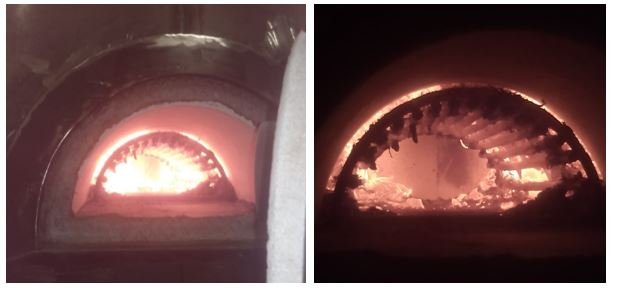
Ignition and secondary combustion zone during operation. Materials for disposal:
- Dry bulk, liquid, and viscous substances are accepted for processing.
- – Solid industrial waste: 2,000 tons/year
- – Liquid waste (oil-based waste [oils, antifreeze, coolants/metalworking fluids], liquid pharmaceutical waste, solvents, paints, varnishes, food products, etc.): 1,000 tons/year
- – Maximum dimensions of items for disposal (prior to loading onto the conveyor): 120 x 120 x 120 mm
- – Loading onto the conveyor: manual.
Additional Information
12-month warranty
Post-warranty service